Middle Market M & A: Handbook for Investment Banking and Business Consulting (Wiley Finance) 2nd Edition

Now Available!

An in-depth and practical exploration of middle-market mergers and acquisitions from leading experts in the field 

In the newly revised Second Edition of Middle Market M & A: Handbook for Advisors, Investors, and Business Owners, mergers and acquisitions experts Kenneth H. Marks, Christian W. Blees, Michael R. Nall, and Thomas A. Stewart deliver a comprehensive overview of mergers, acquisitions, divestitures, and strategic transactions of privately held companies with revenues between $5 and $500 million per year. 

You’ll discover the market trends, perspectives, and strategies commonly affecting business transitions in all phases of a deal, as well as the processes and core subject areas (e.g. valuation, structure, taxation, due diligence, etc.) required to successfully navigate and close transactions in the private capital markets. 

  • The latest edition of this handbook includes new discussions about: 
  • The middle market landscape and the evolution and impact of private equity on the private capital markets  
  • The concepts of mergers and acquisitions from an owner’s point of view 
  • Ways in which transition and value growth planning can optimize the value owners and investors can realize in sell-side and buy-side transactions  
  • New technologies being used in the M&A process 

Perfect for advisors, investors, and business owners, the new edition of Middle Market M & A is a must-read roadmap of the strategic transaction landscape that provides solid, practical guidance for attorneys, accountants, investment bankers, corporate development, exit planners, investors, lenders and the owners, entrepreneurs, and leaders of middle market companies. 

See more at: middlemarketma.com

From spinouts to fundraising to M&A, founders need transparent deal terms — TechCrunch

Welcome to The TechCrunch Exchange, a weekly startups-and-markets newsletter. It’s inspired by the daily TechCrunch+ column where it gets its name. Want it in your inbox every Saturday? Sign up here. With down rounds looming, startup founders have a lot less dealmaking leverage than they did in 2021. If new to the fundraising game, the…

From spinouts to fundraising to M&A, founders need transparent deal terms — TechCrunch

Human[KIND] — Julian Stodd’s Learning Blog

My work over the last two years has involved diving quite deeply into the ‘Social Currencies’ that bind together (or drive apart) our social context. This is a world governed by gut instinct, feeling, the things we ‘believe’ or hope for. This is the world of our humanity and connection, our community and aspiration. Our […]

Human[KIND] — Julian Stodd’s Learning Blog

Web scraping is legal, US appeals court reaffirms — TechCrunch

Good news for archivists, academics, researchers and journalists: Scraping publicly accessible data is legal, according to a U.S. appeals court ruling. The landmark ruling by the U.S. Ninth Circuit of Appeals is the latest in a long-running legal battle brought by LinkedIn aimed at stopping a rival company from web scraping personal information from users’…

Web scraping is legal, US appeals court reaffirms — TechCrunch

The Advantages of a “Date-Certain M&A Process” over an “Assignment for the Benefit of Creditors – ABC”  — Blog of Intellectual Capital

Apart from a formal bankruptcy (Chapter 7 or 11), there are two basic approaches to maximizing enterprise value for underperforming and/or under-capitalized technology, life science, medical device, digital marketing, information & cyber security and solar companies and their Intellectual property:  “Date-Certain M&A Process” and an Assignment for the Benefit of Creditors (ABC). Both of these processes have significant […]

The Advantages of a “Date-Certain M&A Process” over an “Assignment for the Benefit of Creditors – ABC”  — Blog of Intellectual Capital

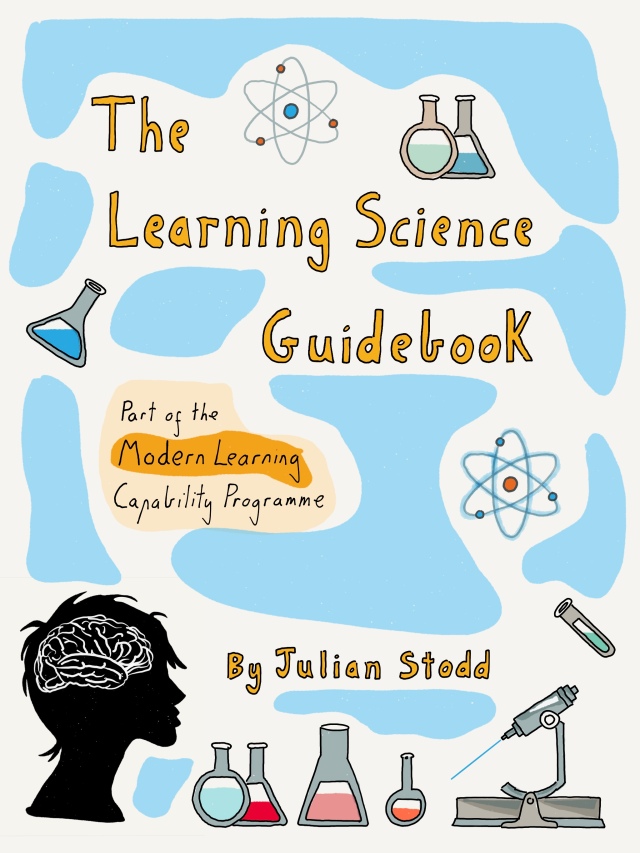
The Learning Science Guidebook

All about the many ways of learning…

Julianstodd's avatarJulian Stodd's Learning Blog

The main text for my next Social Age Guidebook is now complete, although i feel a fair amount of trepidation around releasing it: it explores Learning Science, with a broad approach to helping people to ‘explore their landscape of curiosity’, and to ‘curate their own discipline’. It’s a pragmatic line: if we can build our personal discipline through a solid understanding of evidence, research, and validity, but also pragmatic tools, then we should be able to move our practice forwards.

I have gone into this work with three objectives: firstly, to help build an understanding of what we actually mean by ‘learning science’ and broader scientific discipline, and what it can do for us (and explicitly, what it cannot do for us), secondly, to help people choose the areas they are most interested in, and thirdly, to explore (through a Learning Map)…

View original post 129 more words

The Five Keys to Progress (Part 4): Decentralization of Power

This is what we’re all about!

Michael Magoon's avatarFrom Poverty to Progress

This the fourth post in a series of posts about the Five Keys to Progress. If this is the first post that you have ever read on my blog, I would recommend starting with An Introduction to Progress: Mankind’s Greatest Accomplishment. Then I would recommend reading the first post of this series.

In the previous posts in this series, I argued that the concept of the Five Keys of Progress enables us to better under the history of how nations developed and what policies will work in promoting progress today.

The Five Keys to Progress are the fundamental preconditions that must be established for a society to experience progress. All are necessary, but none are sufficient by themselves. Each evolved slowly as individuals solved local problems and then copied what worked.

I also argued that to transition from poverty to progress, a society needs to acquire and maintain…

View original post 828 more words